紅琉紅堂RYUKOUDO
Sata andagi that links Okinawa and Yamagata
Delicious,
gentle,
a moment to relax.
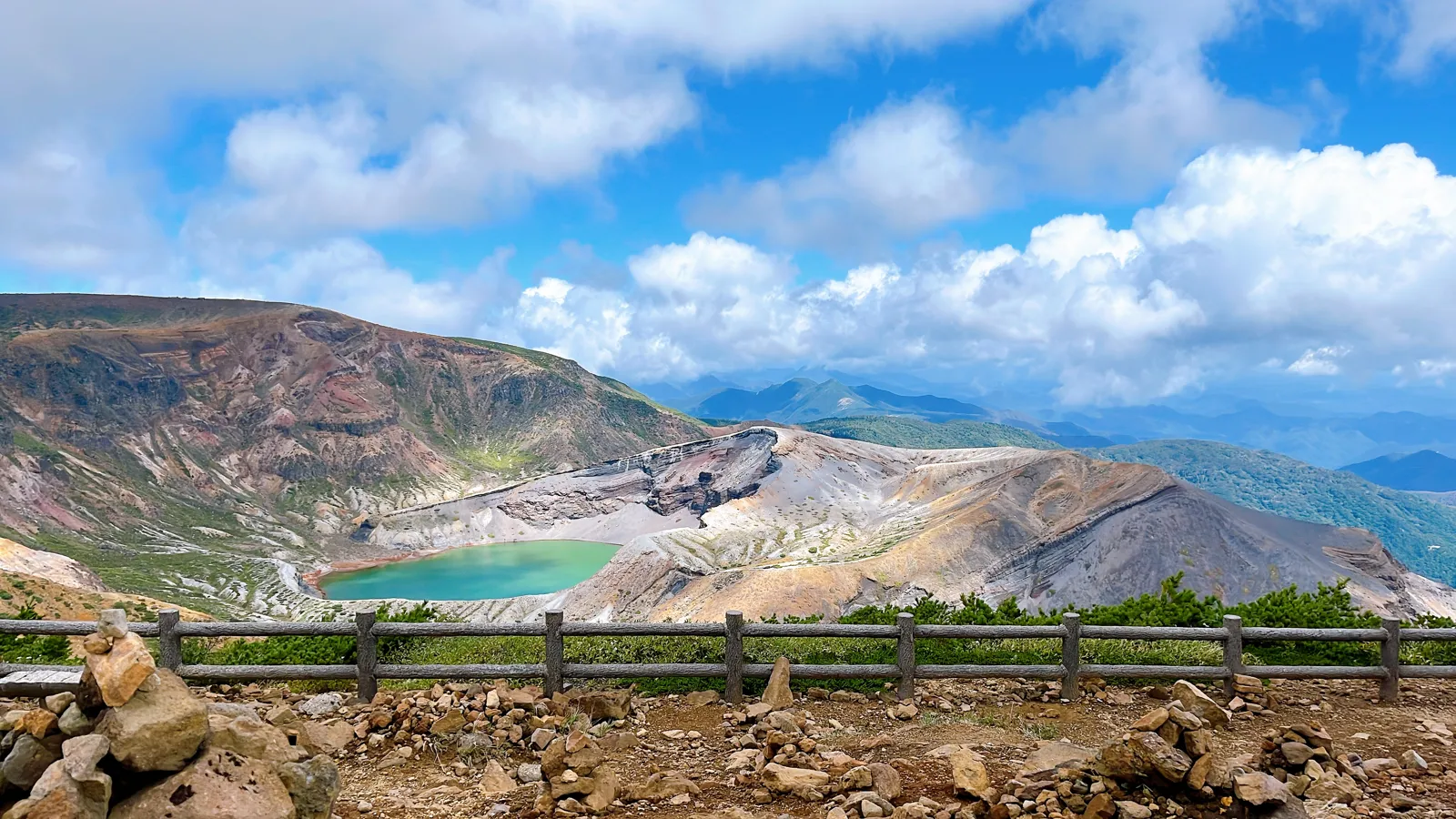
A taste I found on Miyako Island,
made with the gifts of Yamagata.
Now preparing to open. We'll announce the start of sales on Instagram.
Get updates when sales begin (Instagram) ↗Discover Ryukoudo’s sweets →
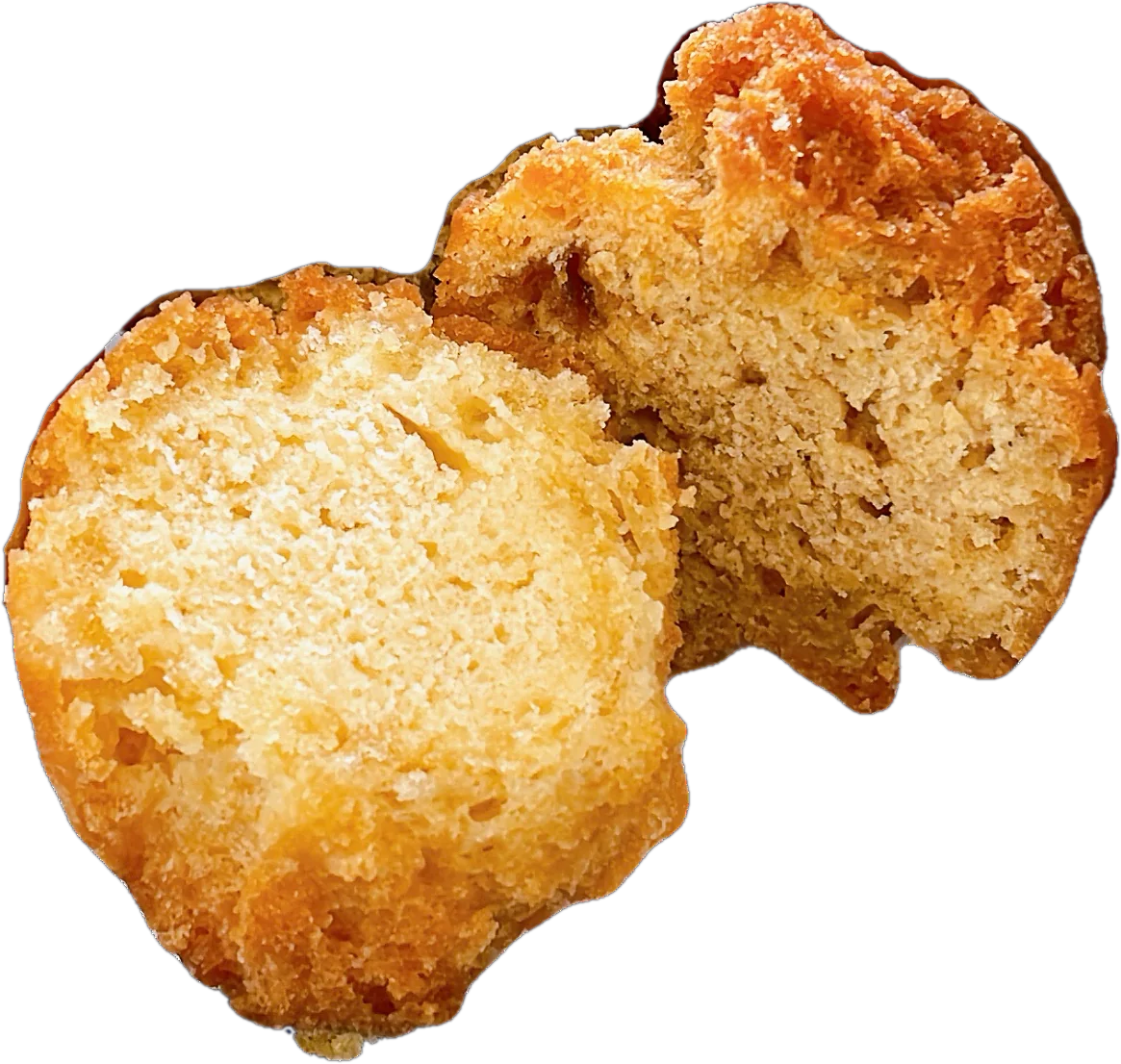 Ryukoudo’s sata andagi

“Ryu” from Ryukyu (Okinawa).
“Ko” (red) from Yamagata’s safflowers.
A shop and a taste that feel like grandma’s house.
Treasuring that warmth,
we aim to be a sweet shop loved across generations.
A traditional Okinawan sweet I learned on Miyako Island.
The rich ingredients of Yamagata, where I was born and raised.
Love for two places, in one sweet.
The name “Ryukoudo” carries respect for the land and food culture of both places, and a commitment to take each sweet seriously, one by one.
02 / OUR SWEETS
With your everyday tea,
one special treat.
Rooted in the taste I found on Miyako Island.
Ryukoudo’s sata andagi
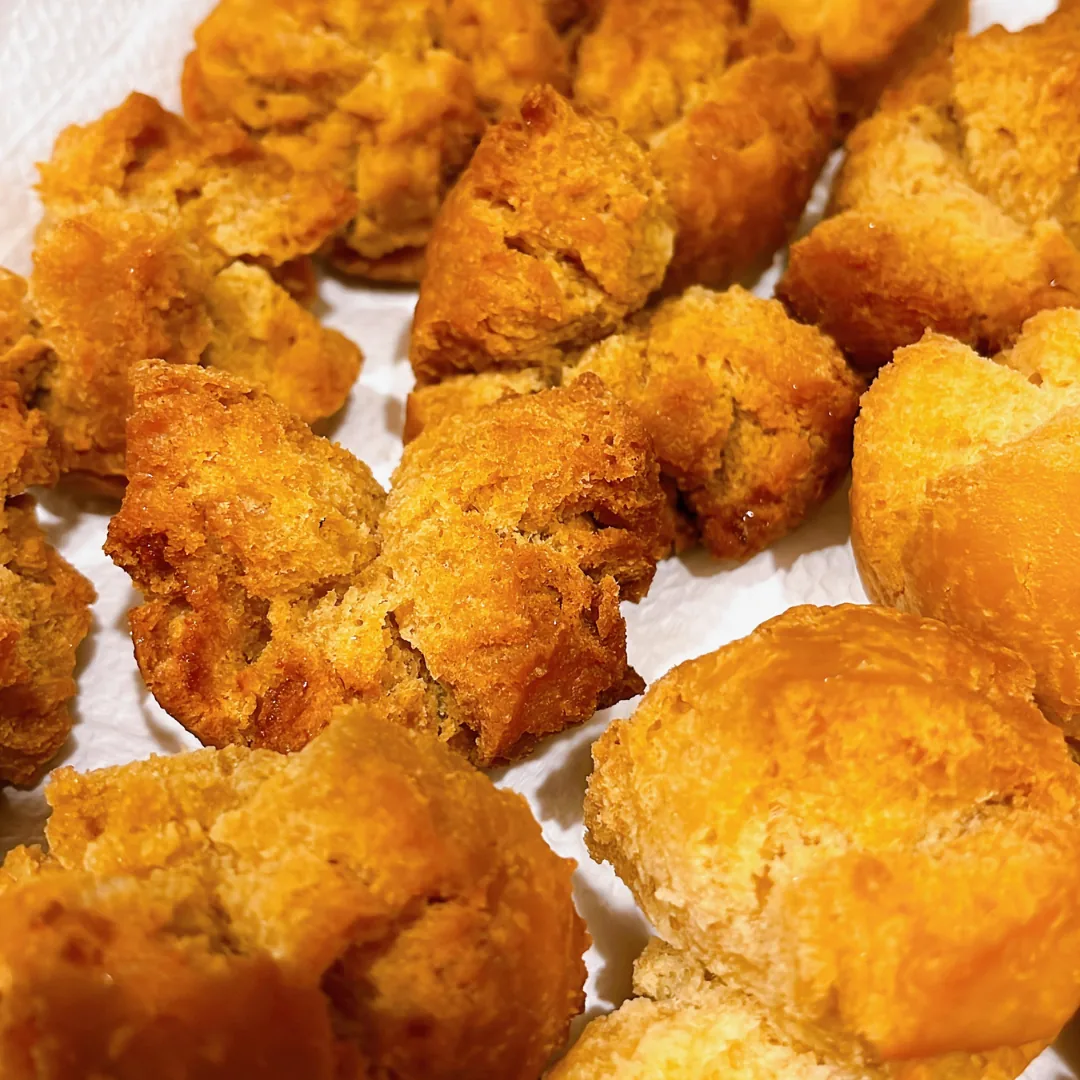
comes in two flavors: plain and brown sugar.
Also lovely as a small gift or a seasonal greeting.
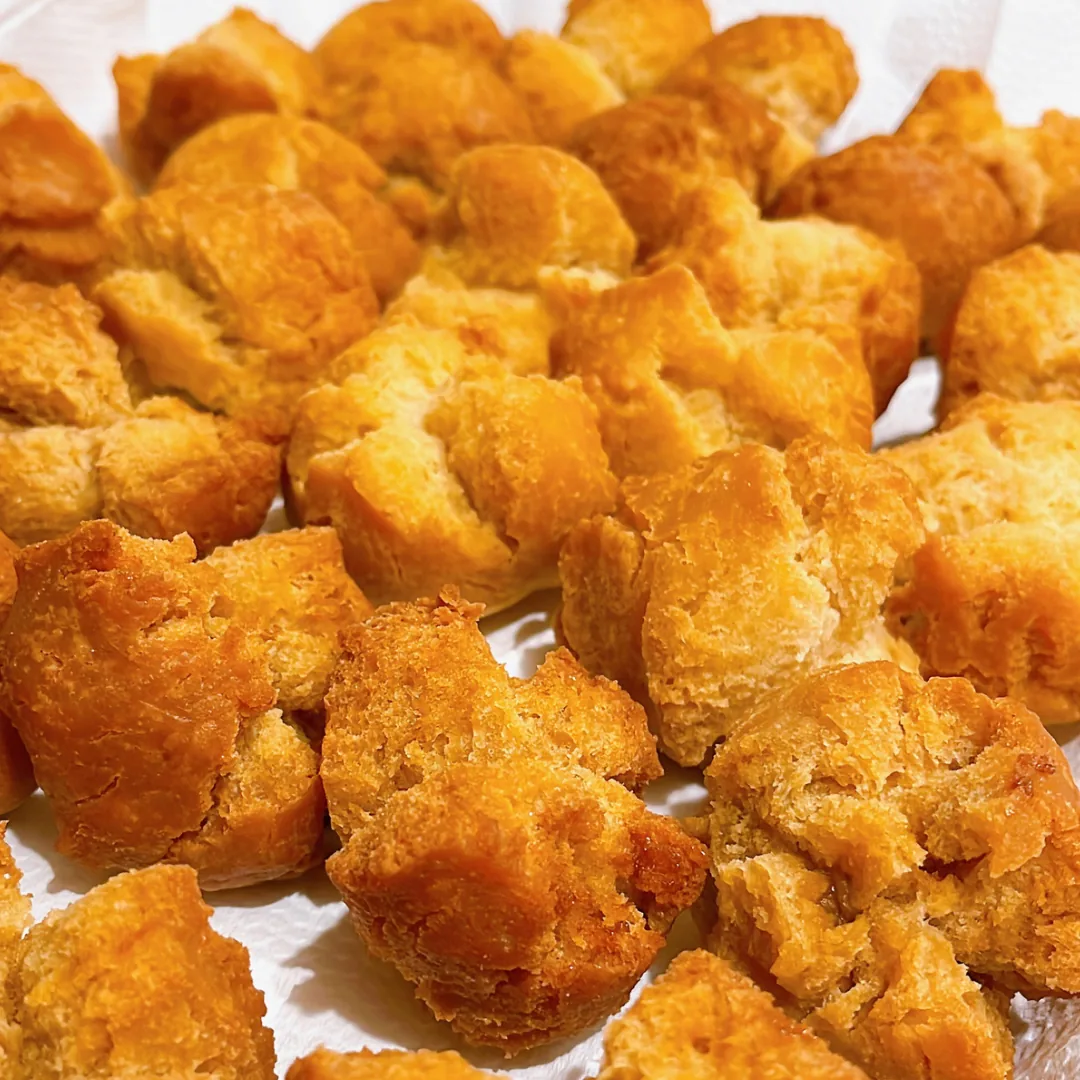
SATA ANDAGI
PLAIN
Plain
Start with the classic.
Carefully balanced in texture and sweetness:
Ryukoudo’s sata andagi.
BROWN SUGAR
Brown sugar (kokuto)
Another flavor: brown sugar.
Try it side by side with the plain,
with your favorite tea.
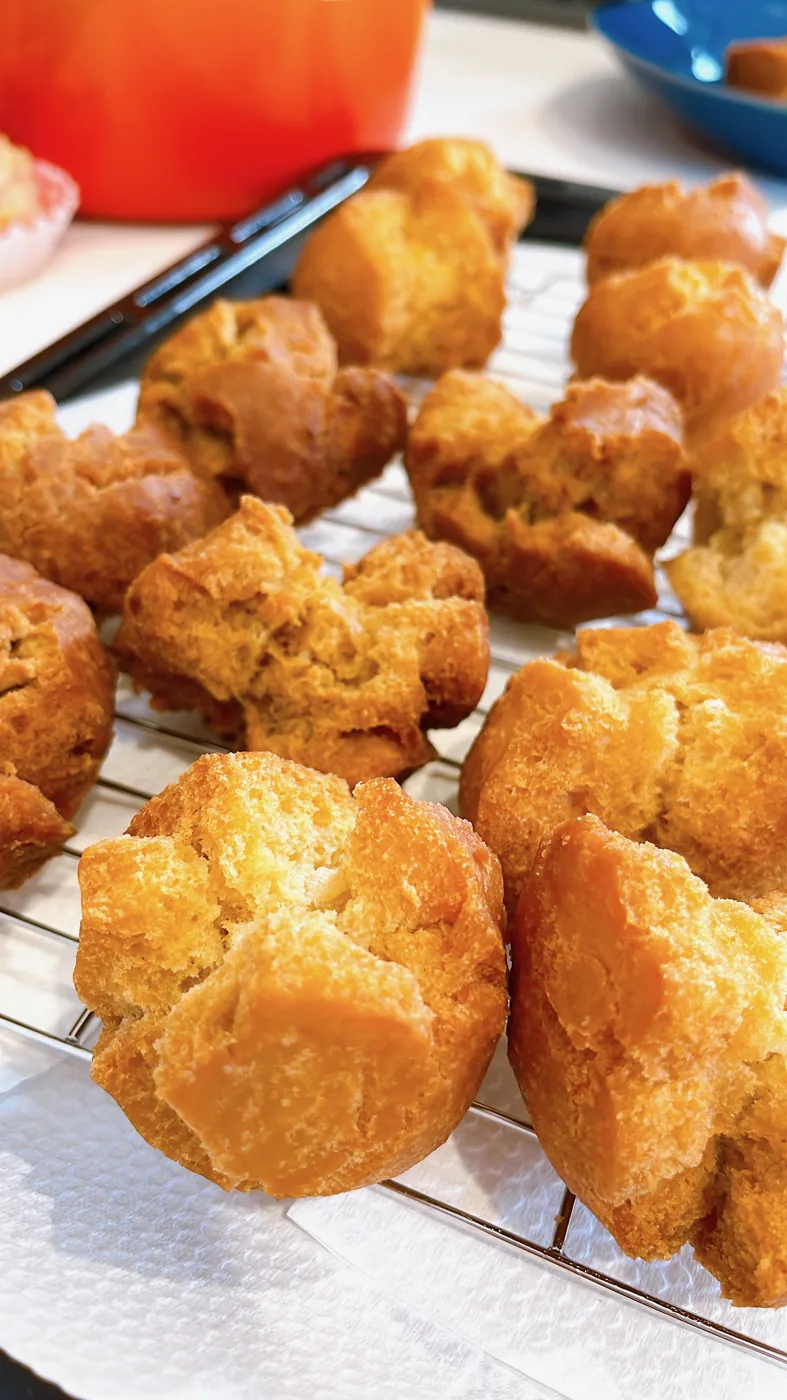
Product photos include trial batches. Details such as price, quantity, and ingredients will be announced when sales begin.
ABOUT SATA ANDAGI
What kind of sweet
is sata andagi?
Sata andagi (also written sata andaagii) is a fried sweet that has long been loved in Okinawa.
Flour is kneaded with eggs and sugar, rolled into balls, and fried in oil.
Think of it as an Okinawan-style doughnut.
The name comes from the Okinawan language.
“Sata” means sugar, and “andagi” means something fried in oil.
Put simply, it means “sugar fried sweet.”
As it fries, one side of the dough bursts open, taking a shape like a flower in bloom.
Because of this shape, it has also been used as a sweet for celebrations.
Read the history of sata andagi +
Since the days of the Ryukyu Kingdom
In the Ryukyu Kingdom, which developed under Chinese influence, “Ryukyu sweets” were born from a blend of Chinese and Japanese styles.
Fried and baked sweets that kept well were said to be essential for celebrations and ceremonies.
Sata andagi is also thought to have come from China.
It closely resembles a Chinese sweet called “kaikoushou” (kai kou xiao, “open-mouth smile”),
and it is also said to have begun about 500 years ago, when a royal cook traveled to China and brought the recipe home.
Today, as a homemade snack and as a sweet for important occasions,
it is one of the most familiar sweets in Okinawa.
Ryukoudo’s sata andagi treasures the taste I learned on Miyako Island, made together with ingredients from Yamagata.
References: Ministry of Agriculture, Forestry and Fisheries, “Uchi no Kyodo Ryori” (Our Regional Cuisines): Sata Andagi, Okinawa / Agriculture & Livestock Industries Corporation, “Sugar and Starch Information,” January 2022: “Local Sweets of Okinawa Prefecture”
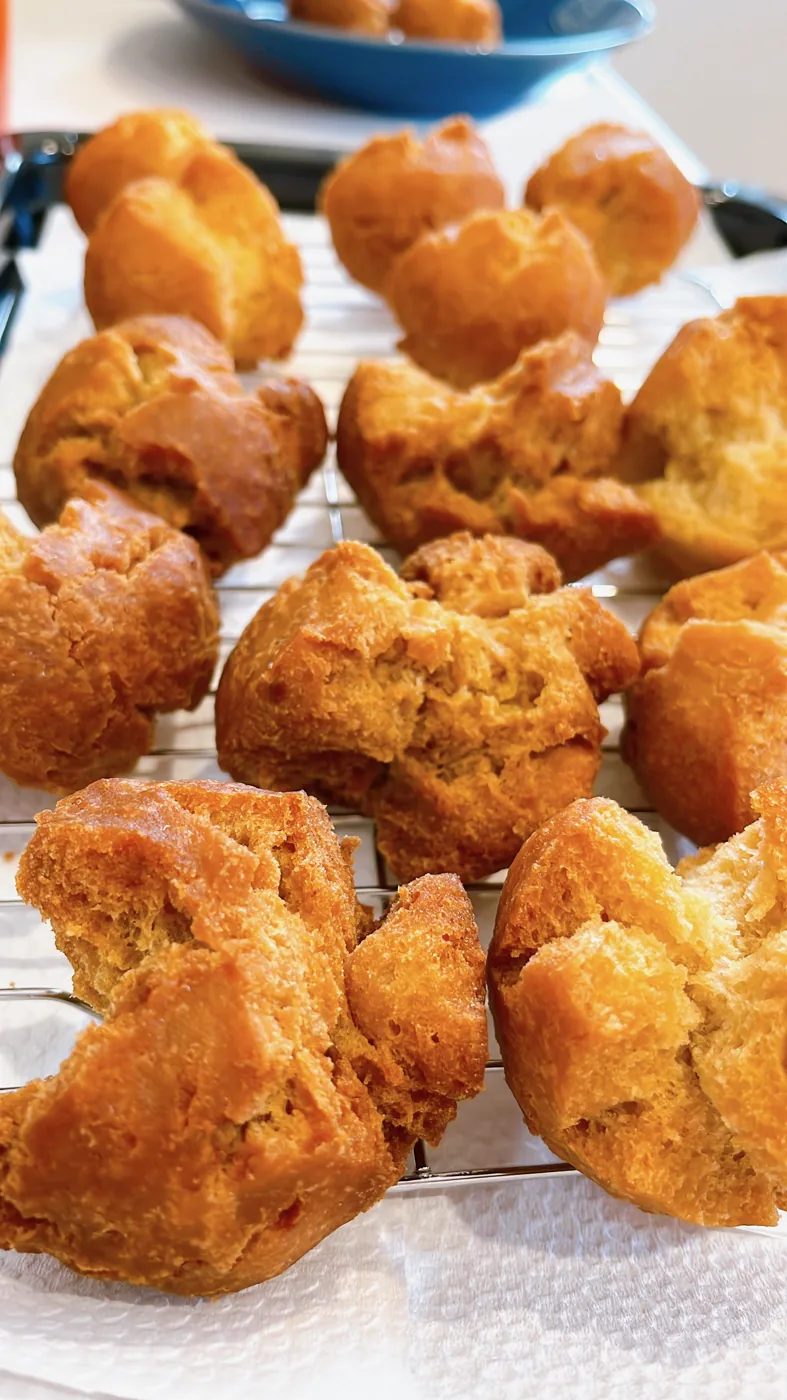 Made by hand, one by one.
03 / OUR CRAFT
Chasing “delicious.”
Above all,
it has to be truly delicious.
For about two months, I tasted test batches almost every morning and evening.
How to use the oil, how to fry, the texture, the sweetness.
Again and again, until I was satisfied.
- 01
Crisp outside, fluffy inside
To keep them from being oily or dry, I have studied the oil and the way they are fried.
- 02
Yamagata’s gifts, as much as possible
While treasuring the taste I learned in Okinawa, I also use ingredients from Yamagata.
- 03
A taste I want to share with family and friends
I want the people I care about to eat them. That feeling is the standard for my sweets.
TASTING NOTES
Words of “delicious” have reached us.
“Crisp outside,
fluffy inside.”
“Just the right sweetness —
exquisite.”
“My child, who doesn’t eat sweets,
asked for seconds.”
Comments from people who have tried them so far.
04 / HOW IT BEGAN
I could tell what “delicious” was.
That made me so happy.
For about 15 years, I struggled with an eating disorder and depression. I no longer knew what I wanted to eat, or how much would satisfy me.
Wanting to understand my condition, I read books and materials and began learning about food and nutrition. Little by little, I challenged myself to eat the meals my body needed, and faced my own mind and body.
Then, on Miyako Island, I came across a single anpan (sweet bean bun). It had gone completely cold, yet it was astonishingly delicious.
“I can tell what tastes good!!”
The part of me that could feel something was delicious was still there.
Oh, I am truly alive. That was the moment I felt it.
Later, I learned that the bean bun had been made with deep care for its ingredients and methods.
Read more of this story +
On Miyako Island, through time with friends, I gradually regained the joy of eating. The people who taught me how to make sata andagi were a friend I met on Miyako, who is originally from the main island of Okinawa, and their mother.
After returning to Yamagata, I was moved again and again by carefully grown vegetables and carefully made sweets. The people who grow ingredients, the people who make food and sweets — I felt their care and effort lead to deliciousness.
From what I learned about food, nutrition, sleep, and more, I value the idea that food and medicine share the same source (“ishoku dogen”). Taking care of everyday meals. Facing your own mind and body. Those thoughts carry through to what I make today.
I want to treasure ingredients, make things carefully by hand, and share what I truly find delicious. That is where Ryukoudo’s sweets begin.
Food as medicine, local for local,
and above all — delicious!
FROM TODAY, FOR GENERATIONS
Someday,
a true long-standing shop.
From parents to children, from children to grandchildren.
“The sweets from that shop are truly delicious.”
I want to be a sweet shop people say that about.
Building up taste, quality, and trust,
aiming for a future loved for decades, even centuries,
I will take each sweet seriously, one by one.
Just as good food once saved me,
I want to pass this joy on to someone else.
One bite, and you feel a little more energized.
Your shoulders relax, just a little.
That is the kind of sweet I hope to make.
On a journey, and in everyday life.
If Ryukoudo’s sata andagi
can become a moment of ease for someone, that would make me very happy.
05 / INFORMATION
Looking forward
to the day we can share them.
Ryukoudo is currently preparing to open.
We plan to sell online and in store.
News about the launch and our products will be shared on Instagram.
Can I buy now?+
We are currently preparing to open. This site does not accept orders. Once sales are set to begin, we will announce it on Instagram.
Do you plan to ship?+
We plan to sell online and ship within Japan. We are also considering international shipping. The start date, regions, and shipping fees will be announced once decided.
Ingredients and allergy information+
Ingredients, allergen labeling, best-before dates, and storage methods will be confirmed before sales begin and provided for each product.